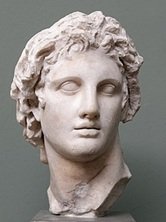

Alexander of Macedon, better known as Alexander the Great, remains one of history’s most influential military leaders and empire builders. Born in 356 BCE, he transformed the small kingdom of Macedon into one of the largest empires the ancient world had ever seen. His remarkable leadership, strategic brilliance, and ambition allowed him to conquer territories stretching from Greece and Egypt to Persia and northwestern India before the age of 33.
Early Life and Education
Alexander was born in Pella, the capital of the Kingdom of Macedon. He was the son of King Philip II of Macedon and Queen Olympias. From an early age, Alexander displayed intelligence, courage, and determination.
One of the most significant influences on his life was his education under the famous Greek philosopher Aristotle. Aristotle taught Alexander subjects such as philosophy, science, literature, politics, and ethics. These lessons helped shape his curiosity about different cultures and strengthened his belief in spreading Greek knowledge throughout the lands he conquered.
Becoming King of Macedon
In 336 BCE, King Philip II was assassinated, and Alexander became the ruler of Macedon at only 20 years old. Many neighboring kingdoms believed the young king lacked experience, but Alexander quickly proved them wrong.
He suppressed rebellions in Greece and secured his authority before turning his attention to the powerful Persian Empire. His goal was not merely to defend Macedon but to create an empire unlike any before it.
Military Campaigns and Historic Victories
Alexander began his campaign against Persia in 334 BCE by crossing the Hellespont into Asia Minor. His disciplined army and innovative battlefield tactics helped him achieve victory after victory.
Some of his most famous battles include:
- Battle of the Granicus (334 BCE): Alexander defeated Persian forces in his first major engagement.
- Battle of Issus (333 BCE): He overcame King Darius III despite being outnumbered.
- Siege of Tyre (332 BCE): After a difficult seven-month siege, Alexander captured the heavily fortified island city.
- Battle of Gaugamela (331 BCE): This decisive victory ended Persian resistance and established Alexander as ruler of the Persian Empire.
His military success came from careful planning, rapid movement, strong leadership, and the loyalty of his soldiers.
Expansion Across Continents
Alexander continued expanding his empire into Egypt, where he was welcomed as a liberator. There, he founded the city of Alexandria, which later became one of the greatest centers of learning and trade in the ancient world.
After conquering Persia, Alexander marched into Central Asia and eventually reached the Indian subcontinent. His army defeated King Porus at the Battle of the Hydaspes River in 326 BCE. Although victorious, his exhausted soldiers refused to march farther east, forcing Alexander to return.
At its height, his empire stretched across three continents, making it one of history’s largest empires.
Leadership Style
Alexander of Macedon was admired for leading from the front. Unlike many rulers who stayed behind their armies, he personally fought in battles and often risked his own life. This bravery earned him immense respect among his troops.
He also encouraged cultural integration by adopting certain local customs and allowing conquered peoples to retain many of their traditions. He believed cooperation was more effective than oppression, although his campaigns were also marked by significant violence and destruction.
The Spread of Hellenistic Culture
One of Alexander’s greatest achievements was spreading Hellenistic culture, a blend of Greek traditions with those of Egypt, Persia, and Asia.
The cities he founded became centers of education, commerce, architecture, and scientific research. Greek language and culture spread across much of the known world, influencing politics, philosophy, mathematics, medicine, and art for centuries.
The Hellenistic Age that followed his conquests shaped the development of both Eastern and Western civilizations.
Death and Legacy
Alexander died in Babylon in 323 BCE at just 32 years old. Historians still debate the exact cause of his death, with theories including illness, fever, poisoning, and complications from previous battle injuries.
Because he left no clear adult heir, his generals divided the empire among themselves, leading to years of conflict. Although his empire fragmented, his cultural influence remained strong.
Today, Alexander the Great is remembered not only as an extraordinary conqueror but also as a leader who transformed the political and cultural landscape of the ancient world.
Why Alexander of Macedon Still Matters
More than 2,300 years after his death, Alexander continues to inspire historians, military leaders, and students worldwide. His campaigns are studied in military academies for their tactical innovation, while his efforts to connect different cultures continue to be examined by scholars.
His life demonstrates the power of vision, determination, and strategic thinking. Although opinions differ regarding the human cost of his conquests, there is little doubt that Alexander of Macedon permanently changed world history.
Conclusion
Alexander of Macedon was far more than a successful military commander. He was a visionary ruler whose ambition reshaped civilizations and connected diverse cultures across Europe, Africa, and Asia. His remarkable achievements at such a young age ensure that his name remains one of the most celebrated in history. Whether viewed as a conqueror, strategist, or cultural bridge-builder, Alexander the Great’s legacy continues to influence the modern understanding of leadership, empire, and global history.